
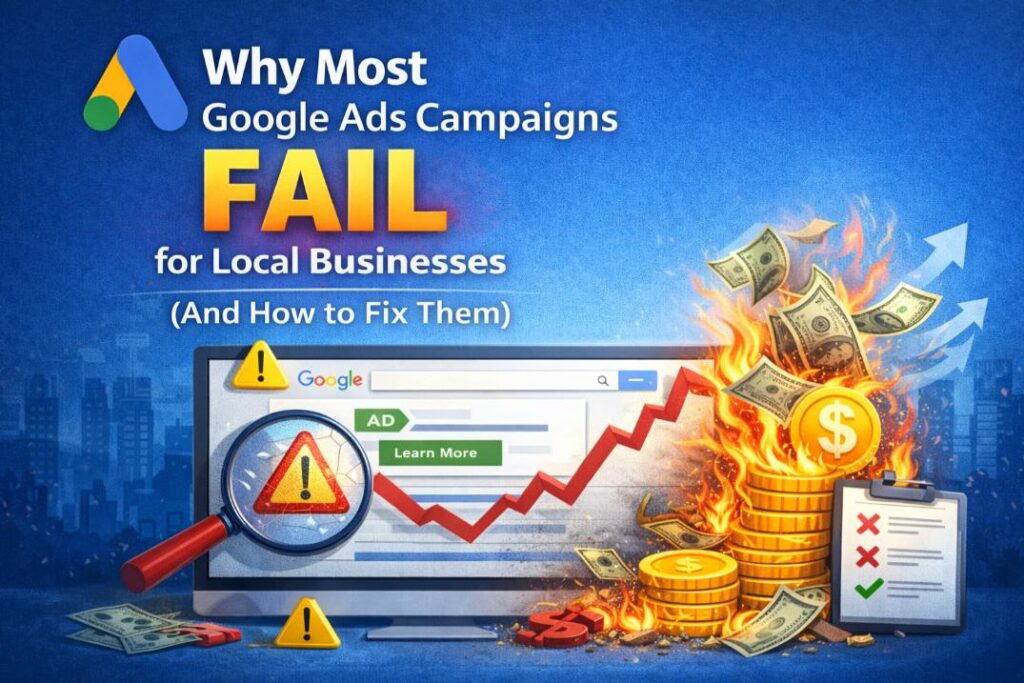
Google Ads can be a powerful tool for local service businesses to generate leads, calls, and bookings. However, many campaigns fail to deliver meaningful results. Understanding why these failures happen is essential for building a successful advertising strategy.
Local businesses often struggle because their campaigns are not structured properly, lack optimization, or do not target the right audience. By identifying the common mistakes and applying best practices, businesses can transform failing campaigns into profitable lead-generating machines.
Common Reasons Google Ads Campaigns Fail
Poor Keyword Strategy
One of the main reasons campaigns fail is targeting the wrong keywords. Broad or irrelevant keywords can attract unqualified traffic, wasting ad spend. Local businesses must focus on specific keywords that reflect their services and location.
Lack of Conversion-Focused Landing Pages
Even if ads get clicks, businesses often fail because the website or landing page does not encourage action. A website must guide visitors to call, book, or request a quote, otherwise traffic is lost.
Improper Budget Allocation
Many local businesses allocate budgets without analyzing performance. Overbidding on low-performing campaigns or underfunding high-intent campaigns can prevent ads from reaching potential clients effectively.
Ignoring Audience Targeting
Google Ads provides advanced targeting options, including location, demographics, and device types. Failing to use these options means ads may reach people who are unlikely to convert, reducing ROI.
No Continuous Optimization
Campaigns need regular monitoring and adjustments. Businesses that set up campaigns and leave them running without optimization often see declining performance over time.
How to Fix Failing Campaigns
Focus on Local and High-Intent Keywords
Identify keywords that local customers use when searching for services. Include location-specific terms to attract people who are ready to convert.
Optimize Landing Pages for Conversions
Ensure that every ad directs traffic to a conversion-focused landing page. Highlight benefits, include clear calls to action, and make forms simple to fill out.
Adjust Budgets Based on Performance
Monitor each campaign and allocate more budget to campaigns that generate qualified leads. Reduce spending on campaigns with poor results to maximize ROI.
Use Advanced Audience Targeting
Leverage Google Ads audience options to target people in your service area who are most likely to book or call. Consider device targeting if your customers mostly convert on mobile.
Continuous Testing and Optimization
Regularly test ad copy, headlines, and landing pages. Use A/B testing to see what resonates with your audience and apply changes based on data.
Conclusion
Most Google Ads campaigns fail for local businesses because of poor targeting, weak landing pages, improper budget management, and lack of optimization. By focusing on high-intent keywords, conversion-focused landing pages, and continuous improvement, local businesses can turn failing campaigns into reliable sources of leads and sales.
Implementing these best practices ensures that your Google Ads investment drives measurable results and supports the growth of your local business.