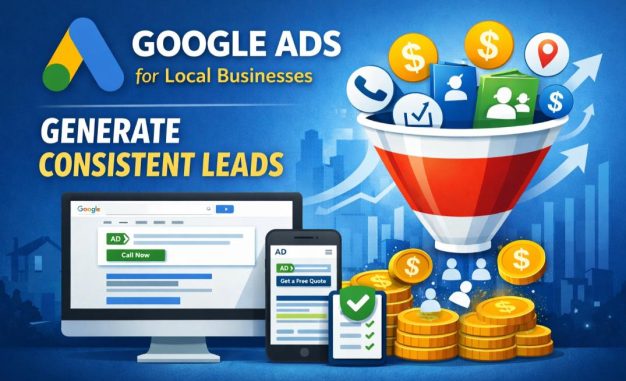

For local service businesses, Google Ads is one of the most powerful tools to attract new clients and generate consistent leads. However, without a clear understanding of how Google Ads works, businesses can spend money without seeing meaningful results. This guide provides a comprehensive overview of Google Ads strategies specifically tailored for local service businesses, helping you maximize ROI and acquire high-quality leads.
We’ll explore campaign types, targeting strategies, bidding methods, ad copy best practices, landing page optimization, and ongoing management techniques that ensure every dollar spent contributes to measurable business growth.
Understanding Google Ads for Local Businesses
Google Ads allows you to appear at the top of search results when potential customers are actively looking for services like yours. For local service businesses, this means your ads can reach people in your area who are ready to book, call, or request a quote.
Benefits include:
- Immediate visibility in search results.
- Targeted audience based on location, demographics, and interests.
- Control over budget, allowing you to start small and scale up.
- Measurable results, helping you track return on ad spend (ROAS) accurately.
Google Ads isn’t just about getting clicks; it’s about attracting the right people who are likely to become paying customers.
Choosing the Right Campaign Type
There are several campaign types within Google Ads, each with unique benefits:
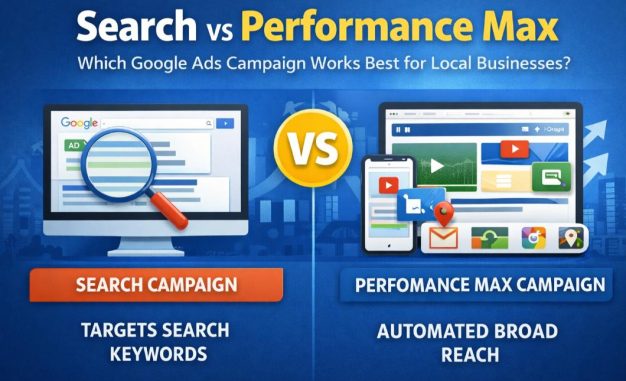
- Search Campaigns: Show text ads to users actively searching for your service. Ideal for high-intent leads.
- Performance Max Campaigns: Google uses automation to distribute your ads across Search, Display, YouTube, Gmail, and Maps. Great for maximizing reach while letting AI optimize conversions.
- Local Campaigns: Focused on driving in-person visits to physical business locations.
- Display Campaigns: Show banner ads on websites to increase awareness, but typically lower conversion rates.
For local service businesses, the combination of Search and Performance Max campaigns often produces the best balance of high-quality leads and cost efficiency.
Targeting Your Ideal Customers
Effective targeting ensures your ads reach people who are most likely to convert. For local businesses, consider:
- Location Targeting: Focus ads on neighborhoods, cities, or zip codes where you offer services.
- Demographics: Narrow down by age, gender, or household income if relevant to your business.
- Device Preferences: Some services perform better with mobile users; adjust bids accordingly.
- Customer Match & Remarketing: Reach previous customers or people who visited your website but didn’t convert.
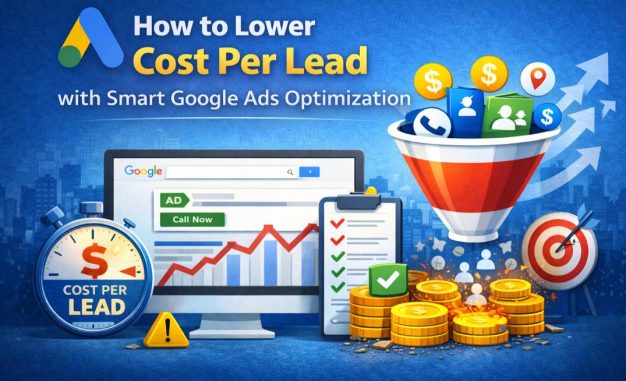
The goal is to eliminate wasted impressions and clicks, which helps lower cost per lead (CPL) and improves campaign efficiency.
Keyword Selection & Optimization
Keywords form the backbone of Google Ads. To attract high-intent local leads:
- Use service-specific keywords combined with location modifiers, e.g., “plumber in Austin TX”.
- Include negative keywords to avoid irrelevant clicks.
- Regularly review search term reports to refine keyword lists.
- Test different match types: broad match modifier, phrase match, and exact match.
Optimized keywords increase ad relevance, improve Quality Score, and reduce the cost of acquiring leads.
Writing Compelling Ads
Your ad copy needs to capture attention and clearly communicate your value. Key tips:
- Include location in your headlines and descriptions.
- Highlight unique selling points like fast service, guarantees, or free consultations.
- Use strong call-to-actions (CTAs) like “Call Now,” “Book Today,” or “Get a Free Quote.”
- Align ads with landing pages to ensure a seamless user experience.
High-quality ads with clear messaging attract more clicks from potential clients and improve campaign ROI.
Landing Page Optimization
Clicking an ad is just the first step. Converting visitors into leads requires effective landing pages:
- Fast loading and mobile-responsive design.
- Simple forms with minimal fields to increase submissions.
- Clear CTAs above the fold.
- Social proof such as testimonials, reviews, or certifications.
Optimized landing pages increase conversion rates, lowering your CPL while generating more qualified leads.
Smart Bidding & Budget Management
Google Ads offers several automated bidding strategies to help local businesses:
- Target CPA (Cost Per Acquisition): Automatically sets bids to achieve a specific cost per lead.
- Maximize Conversions: Uses AI to get the most leads possible within your budget.
- Enhanced CPC (Cost Per Click): Adjusts manual bids based on likelihood of conversion.
Pairing smart bidding with regular budget reviews ensures optimal performance without overspending.
Ongoing Monitoring & Optimization
A successful Google Ads campaign requires continuous monitoring:
- Track key metrics: CPL, CTR, conversion rate, and ROAS.
- Conduct A/B testing on ads, headlines, and extensions.
- Adjust campaigns based on seasonality, promotions, or service updates.
- Refine audience targeting and keywords based on performance data.
Continuous optimization keeps campaigns efficient, relevant, and profitable.
Tracking & Reporting
Proper tracking enables data-driven decisions:
- Use Google Ads conversion tracking to measure leads and phone calls.
- Integrate Google Analytics to monitor website behavior.
- Schedule regular reporting to identify trends, successes, and areas for improvement.
Accurate tracking ensures campaigns remain focused on generating real business results.
Conclusion
Google Ads is a powerful tool for local service businesses when used strategically. By selecting the right campaign types, targeting the ideal audience, optimizing keywords, writing compelling ads, refining landing pages, and monitoring performance, businesses can generate consistent, high-quality leads while lowering cost per acquisition. Implementing these strategies systematically transforms Google Ads into a reliable growth engine for your local business.