
Many local service businesses invest in a website, but still struggle to get calls, bookings, or leads. The problem is rarely traffic alone — it’s usually conversion-focused design. Small design mistakes can quietly push potential customers away and send them to competitors instead.
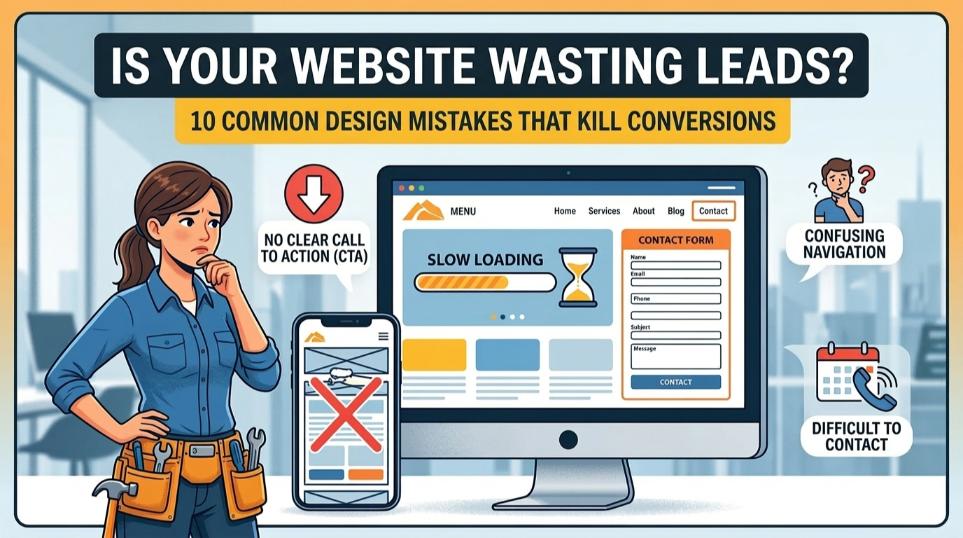
Below are the most common website design mistakes that directly reduce leads and cost local businesses real customers.
1. Slow Website Loading Speed
A slow website is one of the biggest conversion killers. If your site takes more than a few seconds to load, visitors leave before even seeing your offer. Local customers searching for a service expect fast answers, not delays.
Faster websites create better user experience, lower bounce rates, and higher lead conversion.
2. No Clear Call-to-Action (CTA)
If visitors don’t know what to do next, they won’t take action. Many local business websites hide their main goal instead of guiding users clearly.
Your website should prominently encourage actions like:
-
Call now
-
Book an appointment
-
Request a quote
A strong CTA directly increases leads and inquiries.
3. Poor Mobile Experience
Most local searches happen on mobile devices. If your website is not mobile-friendly, difficult to navigate, or poorly formatted on smaller screens, you lose high-intent customers instantly.
A responsive, mobile-optimized design ensures visitors can بسهولة find your services and contact you.
4. Confusing Navigation Structure
Overcomplicated menus and messy layouts make users frustrated. When visitors cannot quickly find services, pricing, or contact information, they leave and choose a competitor with a clearer website.
Simple navigation improves usability and keeps visitors engaged longer.
5. Weak or Outdated Design
Your website is often the first impression of your business. An outdated or unprofessional design creates doubt about your credibility, even if your service is excellent.
A modern, clean design builds trust and positions your business as reliable and professional.
6. Lack of Trust Elements
Local customers want reassurance before contacting a business. Missing trust signals like reviews, testimonials, certifications, or real photos can reduce conversions significantly.
Adding trust elements helps visitors feel confident and more likely to choose your business.
7. Unclear Service Messaging
Many websites talk about the business instead of the customer’s problem. If visitors cannot quickly understand what you offer and how it helps them, they won’t stay.
Clear, benefit-driven messaging increases engagement and lead generation.
8. Ignoring Local SEO Structure
A website that doesn’t mention service areas, locations, or local relevance misses valuable local traffic. This makes it harder for potential customers in your area to find and trust your business.
Location-focused content strengthens visibility and attracts more qualified local leads.
9. Complicated Contact Process
Long forms, hidden contact pages, or too many required fields reduce conversions. Local customers prefer fast and simple ways to reach a business.
Easy contact options like click-to-call buttons and short forms improve lead volume.
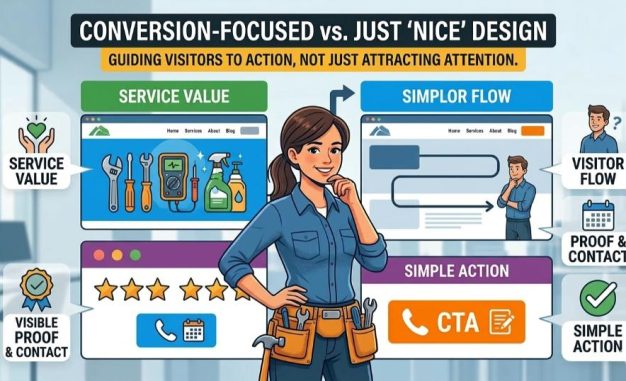
10. Designing for Looks Instead of Conversions
A beautiful website is not enough if it doesn’t generate results. Many businesses focus only on visuals while ignoring structure, user journey, and conversion strategy.
A conversion-focused website balances design, clarity, speed, and user experience to turn visitors into real customers.
Final Thoughts
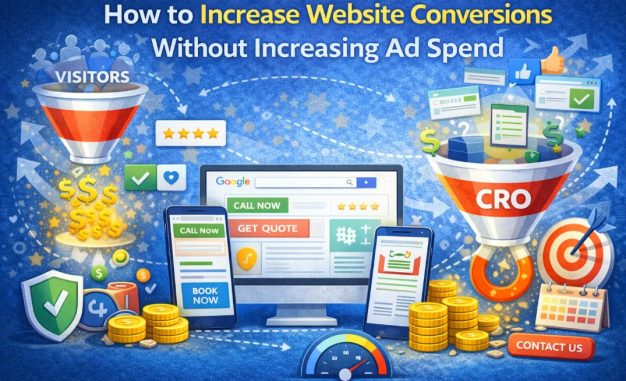
Your website should function as a lead generation tool, not just an online brochure. By fixing these common design mistakes, local service businesses can significantly increase calls, bookings, and qualified leads without increasing ad spend.